Unlock Your 7-Day Free Trial with Free Credits!
Get Started for Free



RCS pricing update - 2026
September 7, 2026
.
Anya Sam . 8 min read


RCS (Rich Communication Services) enhances business messaging with rich, interactive experiences such as images, carousels, CTAs, verified identities and two-way conversations.
Key takeaways:
Latest RCS pricing: From September 1, 2026, Transactional and Conversational RCS cost ₹0.13/message, while Promotional RCS costs ₹0.25/message, plus GST.
Why RCS prices changed: Higher carrier-level costs and Inter-Operator Charges (IOC) have contributed to the increase, along with clearer pricing based on message type.
How to control RCS costs: Use multichannel campaigns, strategic RCS segmentation, simpler transactional messages and performance-based audience targeting to spend where RCS delivers the most value.
RCS vs. SMS vs. WhatsApp: SMS remains suitable for high-volume messaging, while RCS and WhatsApp can offer greater value when richer experiences or conversations justify the cost.
Why GreenAds Global: Manage RCS, SMS and WhatsApp from one dashboard with AI agents, Shopify and CRM integrations, real-time reporting, multi-operator support and SMS fallback.

If RCS is part of your business messaging strategy, there has been an important latest RCS price change in India.
From September 1, 2026, RCS pricing has increased, particularly for promotional traffic. The change is linked to higher carrier-level costs, including the introduction of Inter-Operator Charges (IOC) on RCS traffic.
Here is what the latest RCS price change means for businesses.
1) What are the latest RCS Pricing Changes?
The RCS messaging cost that previously was around ₹0.06–₹0.07 can now be approximately ₹0.20–₹0.25, depending on the applicable rate.
Carrier, message type, message richness, monthly volume and commercial terms can affect the actual price. Businesses should therefore refer to our RCS current in this blog for the exact billed rate.
2) Latest RCS Price Change – September 1, 2026
Following the latest RCS price change in India, as of September 1, 2026, Transactional RCS messages priced at ₹0.13 per message, Promotional RCS messages at ₹0.25 per message and Conversational RCS messages priced at ₹0.13 per message.
In addition to this GST prices are also applicable for each message.
Yes, the RCS marketing rate has increased but now the pricing structure now provides a clearer distinction between promotional and transactional RCS messaging, helping businesses better understand and plan their RCS messaging costs based on the type of traffic they send.
Here are the RCS pricing updates at a glance :
- Transactional RCS: ₹0.13 per message, typically used for customer alerts, updates, and other non-promotional communications.
- Promotional RCS: ₹0.25 per message, applicable to marketing campaigns and promotional communications.
- Conversational RCS: ₹0.13 per message, applicable when a P2A message is delivered within 24 hours of an A2P message, enabling two-way customer conversations.
3) Why has the RCS Pricing Increased?
a) Inter-Operator Charges on RCS
Telecom operators have introduced Inter-Operator Charges (IOC) on RCS traffic.
When a business RCS message is delivered through an operator's network, the operator charges for carrying that traffic. These carrier-level costs are reflected in the pricing offered by RCS providers.
b) Higher Carrier-Level Costs
RCS operates across telecom networks, and changes in carrier economics affect the overall cost of delivering business traffic.
Operators have also invested in mechanisms such as AI-based spam filtering to identify and prevent unwanted messaging traffic.
c) Clearer Promotional and Transactional Pricing
Another important development is the distinction between promotional and transactional RCS. The practical implication is that businesses need to pay closer attention to message classification and channel selection.
Besides these 3 main reasons, there are several other reasons why RCS pricing chnaged and may continue to change in the future.
a) Operator and provider pricing is becoming more structured
RCS for Business supports different types of communication.
For example, a business might use RCS to send an order confirmation after a purchase, while another campaign might use images, product cards and a "Shop Now" button to promote a festive sale. Because these use cases are different - A single publicly quoted number does not necessarily represent an industry-wide retail rate across all operators and providers.
It is also important to understand that Google RCS message pricing is not simply one fixed retail rate controlled entirely by Google. The amount a business ultimately pays can be influenced by the commercial arrangements between telecom operators, technology partners, aggregators, CPaaS providers and other service providers involved in delivering the messaging service.
As these commercial arrangements change, the rates offered to businesses can change as well.
b) Promotional and transactional traffic have different requirements
One of the first things businesses should establish when comparing RCS pricing is what type of communication they are sending.

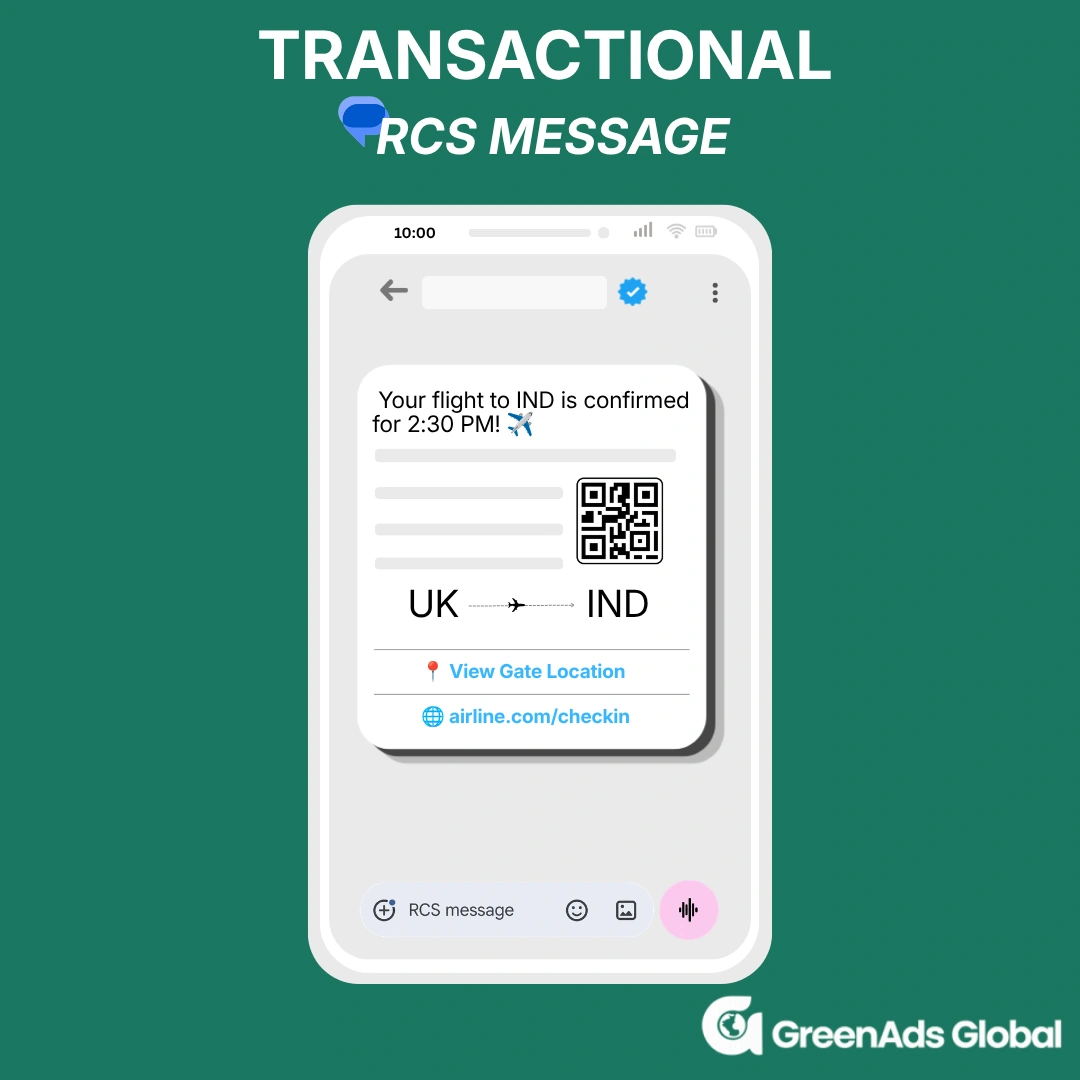
Transactional RCS
Transactional messages are generally connected to an existing customer action or service. They help customers stay informed about something they have already requested, purchased or initiated.
Promotional RCS
Promotional messages are designed to generate awareness, engagement or sales.
A promotional campaign can also require more campaign planning and management. Businesses may need to prepare creative assets, segment audiences, test messages and analyse campaign performance.
As a result, the final provider quotation may include more than the basic cost of message delivery.
Conversational RCS
Conversational messages begin when a customer replies to an A2P message, creating a two-way conversation within a 24-hour window.
Messages exchanged during this 24-hour window are covered by a single conversation charge, with no additional charge for each individual reply.
This makes conversational messaging particularly useful for customer support, product discovery and lead qualification, where customers may need to exchange multiple messages with a business rather than receive a single one-way update.
c) Campaign volume can change the commercial equation
The amount of RCS traffic a business sends can also influence the pricing it receives.
Providers may offer volume-based pricing, minimum commitments or different rates for different usage slabs.
This makes it important to understand the conditions behind a quoted price.
You can refer the section 5) "How does RCS price affect Tiered Messaging Pricing?" to see how RCS message price varies at different volumes.
Before comparing two RCS quotations, businesses should ask:
- What monthly message volume is assumed?
- Is there a minimum volume commitment?
- Are messages billed when submitted or when delivered?
- Are platform or onboarding charges separate?
- Is GST included?
- How are SMS fallback messages charged?
- Does the per-message rate change at higher volumes?
Consider two quotations:
Provider A: ₹0.20 per message
Provider B: ₹0.15 per message
At first glance, Provider B appears cheaper. But if Provider B has a large minimum volume commitment or charges separately for platform services and fallback, the final cost may be very different.
4) What Are Transactional, Promotional and Conversational RCS Messages?
Transactional RCS messages are service-related communications sent in response to a customer action or interaction. They can use rich cards, images, buttons and carousels to present information such as order updates, delivery details, booking confirmations, payment alerts, and other service notifications in a more interactive format.
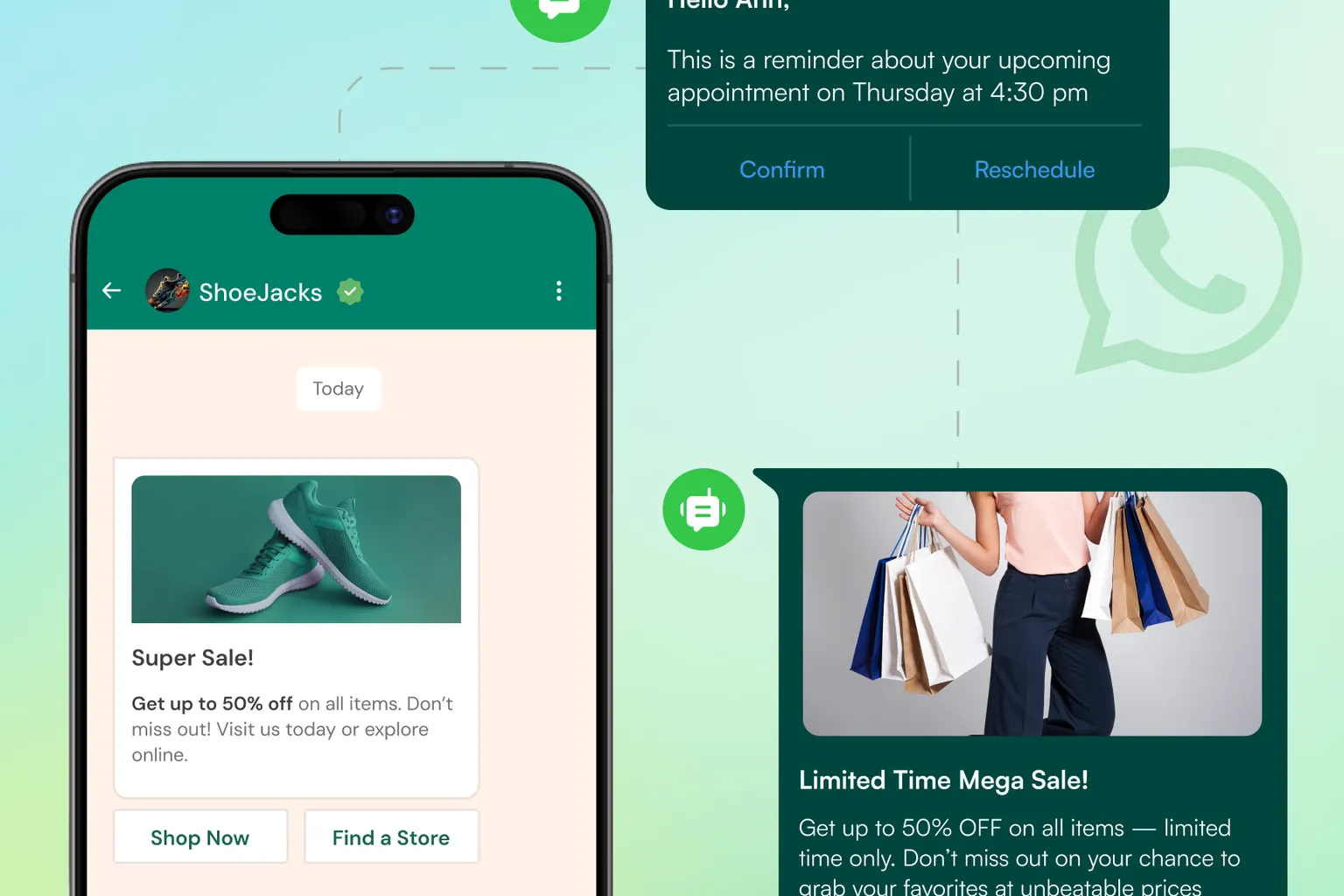
Promotional RCS messages are marketing communications designed to promote products, services, offers, or campaigns. Businesses can also use rich cards and carousels in promotional RCS to showcase products, highlight offers, display multiple products, and include clear calls to action.
Conversational RCS messages begin when a customer replies to an A2P message, creating a two-way conversation within a 24-hour window. There is no additional charge for individual messages exchanged during this window, as a single conversation charge covers the entire 24-hour interaction. This makes conversational RCS particularly useful for customer support, product discovery, lead qualification, and other interactions where customers may need multiple replies from the business.
5) How does RCS price affect Tiered Messaging Pricing?
Tiered messaging pricing means RCS messages are priced according to their message category, rather than applying one rate to all traffic. With separate pricing for transactional and promotional RCS messages, businesses can better estimate their messaging costs based on the type of communication they send.
6) How to reduce RCS Pricing Cost?
With higher RCS messaging costs, businesses should focus on controlling messaging spend and improving channel efficiency rather than simply sending messages at scale. With GreenAds Global messaging solutions- India's best RCS message provider, two of our features can help reduce unnecessary RCS costs:
1. Run Multichannel Campaigns
RCS, SMS and WhatsApp can be managed from a single platform, allowing businesses to build multichannel messaging campaigns instead of relying on one channel for every customer. Businesses can segment their audience and use RCS where rich messaging adds value, while using SMS or WhatsApp for customers or use cases where those channels are more cost-effective.
The goal is not simply to reduce the number of RCS messages sent. It is to send each message through the channel that delivers the best balance of cost, reach, engagement and business outcome.
2. Split your RCS sends strategically
Not every customer or message needs the same level of engagement.
Instead of sending one large RCS campaign to your entire database, divide your audience and use RCS where it is most likely to make a difference.
Forexample:
- Use RCS for customers who are more likely to engage with rich content.
- Use SMS or WhatsApp for audiences where a simple notification is sufficient.
- Use RCS for high-value campaigns where images, carousels or interactive buttons can improve the customer experience.
Greenads global lets you do that with it multichannel campaign dashboard.
3. Reserve promotional RCS forcampaigns where rich content matters
Instead of automatically sending every marketing messagethrough RCS, ask whether the richer format actually improves the campaign.
For example, a product launch with images, multipleproducts and a direct CTA may benefit significantly from RCS. A simple reminder about an offer may not need the same treatment.
The goal is not to eliminate promotional RCS. It is to use it selectively for campaigns where richer experiences can justify the additional cost.
4. Keep transactional templates simple
Transactional communication is often frequent: order updates, payment confirmations, delivery notifications and account alerts can generate a large number of messages.
For these messages, keep the content focused on the information the customer actually needs.
This helps businesses avoid adding complexity where it does not provide meaningful value to the customer.
5. Compare performance by audience segment
The cheapest way to send a message is not necessarily the most cost-effective way to run a campaign.
Businesses should look at cost alongside campaign performance.
For example, one audience segment may have a higher RCS cost but generate significantly more clicks, enquiries or purchases. Another segment may receive the same message but show very little engagement.
By comparing performance across segments, businesses can identify where RCS delivers the strongest return and prioritise those audiences in future campaigns.
7) How does the new RCS messaging cost compare with WhatsApp and SMS messaging ?
For high-volume, straight forward communication, SMS remains the cost-efficient choice, especially as volume increases and per-message rates come down. It also has the advantage of universal reach, making it a practical option when you need to reach customers on virtually any phone.
RCS changes the equation when the message benefits from a richer experience. Transactional RCS is priced at around ₹0.13+ GST per message, which is close to the ₹0.14 SMS rate at the100,000-message tier. But promotional RCS is higher at around ₹0.25 + GST, reflecting the richer, interactive experience with features such as images, carousels and CTAs. In other words, you pay more when the format itself is expected to drive more engagement.
WhatsApp works differently again. Utility, authentication and service messages are around ₹0.12 + GST, while marketing messages are significantly higher at ₹0.90 + GST. This makes WhatsApp particularly relevant when the value comes from an ongoing, conversational customer relationship rather than simply delivering a message.
To answer a question most business owners would have in mind -
Which business messaging channel is now the cheapest ?
The answer is simple - It depends on the job. A utility or authentication message may be more economical on WhatsApp, while a transactional message can be competitively priced on RCS. For high-volume, simple messaging, SMS can still make the most sense. And for rich promotions, RCS or WhatsApp may justify their higher rates through better engagement.
8) What should businesses who use RCS messaging do now ?
Higher messaging costs make audience and channel selection more important.
1. Review Your Audience
Avoid sending expensive promotional messages indiscriminately.
Prioritize users based on factors such as engagement, responsiveness and expected value.
2. Review Your Channel Mix
RCS should be used where its richer experience justifies the cost.
For other use cases, businesses can evaluate SMS, WhatsApp or other channels based on message type, audience behaviour and current economics.
3. Optimize Content
Test messaging, creative and calls to action instead of treating every campaign as a fixed broadcast.
4. Measure Outcomes
Track the complete journey:
Message → Click → Conversation → Conversion
A campaign should be evaluated on the business outcome it generates, not just delivery volume.
9) Why choose GreenAds Global as your RCS Messaging Service provider ?
Choosing an RCS messaging service provider involves sending RCS messages to your customers and whether customers can get answers, discover products, complete purchases, and whether your team can track the entire journey. GreenAds brings these capabilities together in one multichannel dashboard.
With our features, you get multiple features at a nominalaffordable fee. Here are some of them :
a) AI Agents that understand yourbusiness
GreenAds RCS AI Agents can work as 24/7 chat support, automatically responding to customer queries without requiring an operator for every conversation. The agent can learn from your products, services, FAQs, and company knowledge and use that information to answer customer questions accurately.
It can also understand customer intent and respond accordingly, rather than simply matching keywords. With support for 100+ languages, businesses can serve customers across different markets while maintaining a consistent brand experience.
b) Turn RCS into a shopping experience with Shopify
With Shopify integration, RCS can become more than a promotional messaging channel. Customers can discover products, browse carousels, view product information and move toward purchase directly within the RCS chat.
Instead of sending a customer from a message to another platform to complete their journey, businesses can connect product discovery to purchase within the conversation.
c) Connect your CRM and turn conversations intoleads
GreenAds can integrate with your CRM, allowing businesses to track customer interactions and identify qualified leads. Responses, engagement and actions such as product purchases can be recorded, giving sales teams better visibility into which conversations are actually driving business outcomes.
d) Manage conversations with multiple operators
When conversations need human intervention, GreenAds supports multiple operators including Jio, Airtel, BSNL and Vodafone Idea allowing teams to manage customer interactions from a shared environment. AI can handle routine queries while conversations requiring a human touch can be passed to the appropriate team member.
e) See campaign performance in real time
GreenAds provides real-time reporting so businesses can monitor campaign performance as it happens. Instead of waiting until the end of a campaign to understand what worked, teams can track delivery, engagement and responses and make better decisions along the way.
f) One dashboard for everychannel
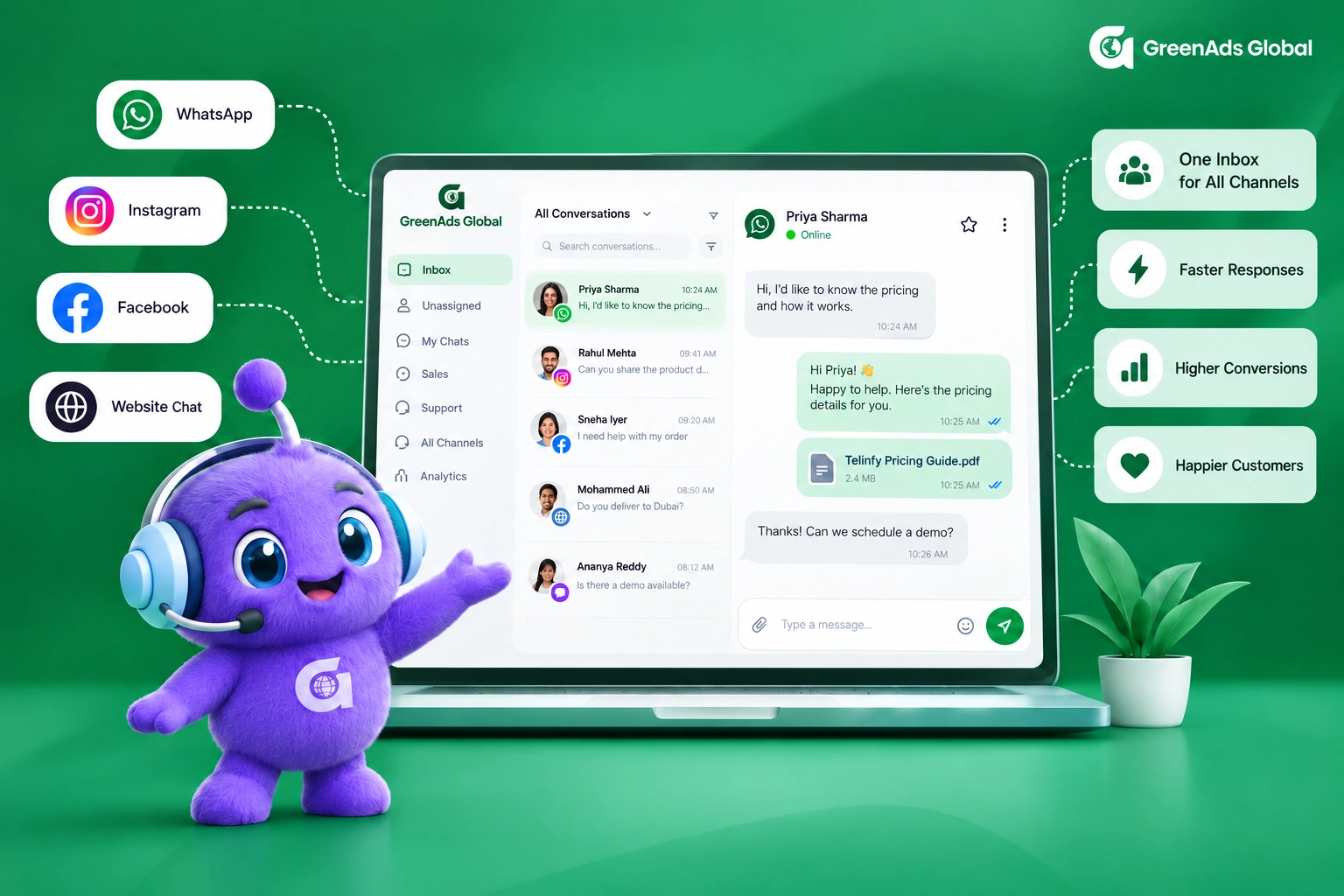
SMS, RCS and WhatsApp can be managed through a single multichannel dashboard. This makes it easier to decide which channel is right for each customer and message instead of managing separate platforms and workflows.
And with SMS fallback, businesses can protect message reach when RCS delivery isn't possible - so the customer doesn't simply disappear from the communication journey.
10) Conclusion
RCS pricing is changing, but that does not automatically make RCS less valuable.
RCS still offers capabilities that traditional SMS does not, including verified sender identity, rich cards, carousels, interactive buttons and read receipts.
The strategic question is where those capabilities create enough additional value to justify the cost.
The winning approach is not necessarily to find the cheapest message.
It is to find the combination of channel, audience, content, pricing model and conversation flow that produces the best business outcome.
[[cta]]
See how CRM events become customer communication
Open each workflow to see the trigger, live-data check, communication action and stopping condition.
New lead qualification
Abandoned cart follow-up
Appointment communication
Payment or renewal reminder
Should the next message still be sent?
Open a customer state to see how current CRM or commerce data should change the workflow.
Lead is already qualified
Customer completed the purchase
Appointment was cancelled
Payment is complete
₹ 899
₹ 2,249
₹ 3,149
$30
$50
Frequently Asked Questions
1. What is the latest RCS price change in India?
The latest RCS pricing update in India took effect on September 1, 2026, with separate rates for promotional and transactional RCS messages. The rates applicable under the September 1, 2026 RCS pricing update are ₹0.13 per transactional RCS message and conversational RCS message and ₹0.25 per RCS promotional message.
2. What is the current RCS pricing in India?
The most recent RCS rates applicable under the September 1, 2026 RCS pricing update are ₹0.13 per transactional RCS message and conversational RCS message and ₹0.25 per RCS promotional message.
3. Why has RCS messaging pricing increased in India?
RCS pricing has increased due to higher carrier-level costs, including Inter-Operator Charges (IOC) applied to RCS traffic.
4. What is the difference between promotional and transactional RCS messages?
Promotional RCS messages are used for marketing, offers and campaigns, while transactional RCS messages communicate service-related updates such as orders, bookings and alerts.
5. How does the RCS pricing model work?
RCS pricing can vary based on factors such as message category, messaging volume, operator charges and applicable commercial terms.
6. How much does an RCS promotional message cost?
The most recent RCS rates applicable under the September 1, 2026 RCS pricing update are ₹0.25 per promotional message.
7. How much does a transactional RCS message cost?
The most recent RCS rates applicable under the September 1, 2026 RCS pricing update are ₹0.13 per transactional message.
8. How can businesses reduce RCS messaging costs?
Businesses can reduce RCS messaging costs by segmenting audiences, optimizing channel selection, using SMS fallback and choosing RCS where its richer experience adds value.
9. What are the changes in the tiered RCS messaging pricing ?
Tiered RCS pricing varies by monthly message volume. Based on the current pricing table, messages below 1 lakh cost ₹0.30 each, while volumes of 1 lakh or more are priced at ₹0.26 per message.
10. Is RCS still worth using after the 2026 pricing increase?
Yes. RCS can still be valuable when features such as rich cards, carousels, interactive buttons and verified sender identity deliver measurable business outcomes.
You may Also like
Book a One-to-One Meeting With Our Product Expert
Have questions? We have got answers! Connect with our product expert for a personalized demo session and discover the best messaging solutions for your business.
.svg)
